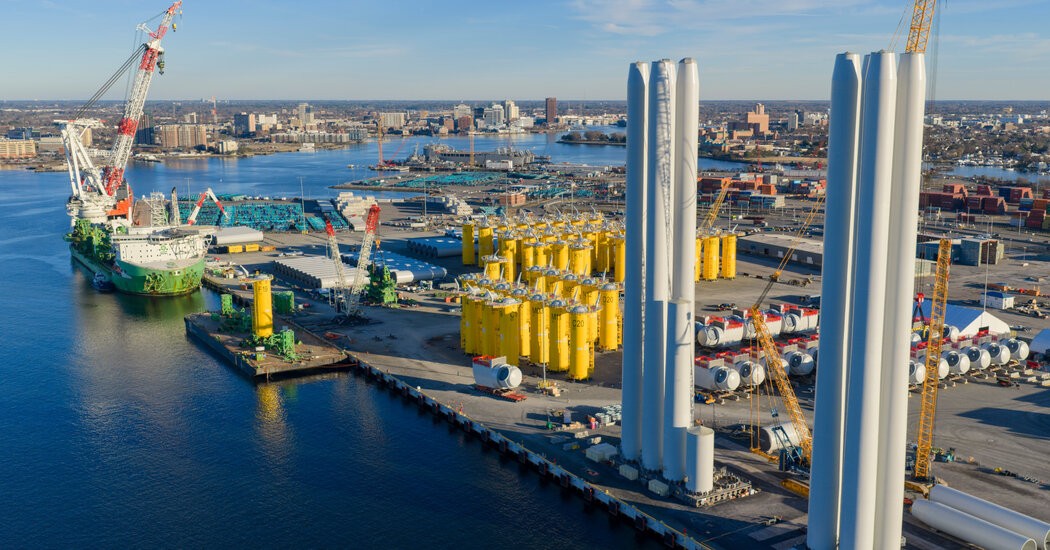
The Trump administration’s attempt to halt offshore wind farm construction has suffered another legal blow. On Friday, a federal judge in Virginia ruled that the $11.2 billion Virginia Coastal Offshore Wind project can proceed with construction despite an earlier order from the Interior Department to suspend all work. This marks the third time this week that courts have blocked the administration’s efforts to stall wind energy development.
Government Justification Questioned
Last month, the Interior Department abruptly ordered work stopped on five major offshore wind projects, citing vague “national security concerns.” This move sparked immediate legal challenges from developers, who argued the government offered no credible explanation for the halt and that delays would inflict severe financial damage.
Courts Side with Developers
Judges have consistently ruled in favor of the wind energy companies. This week, courts have issued preliminary injunctions allowing construction to resume on the Virginia project, as well as the Revolution Wind project (Rhode Island) and Empire Wind (New York). The Virginia ruling specifically allows Dominion Energy to continue building its wind farm while pursuing its lawsuit against the stop-work order.
Massive Project at Stake
The Virginia Coastal Offshore Wind farm is slated to become the largest of its kind in the US, comprising 176 turbines with a capacity of 2.6 gigawatts – enough to power roughly 660,000 homes. Dominion Energy has already invested $8.9 billion into the project, which is 70% complete, and estimated daily losses at $5 million due to the administration’s intervention.
Broader Implications
The repeated court defeats highlight the administration’s difficulty in legally justifying its opposition to renewable energy development. The rulings suggest that halting these projects without clear evidence of national security threats will not stand up in court, and will likely accelerate legal challenges to future attempts to block similar initiatives.
These defeats raise questions about the true reasons behind the administration’s actions. The abrupt halt, coupled with unspecified concerns, suggests a possible political motive rather than a legitimate security risk. The wind farm industry is now moving forward while the administration reconsiders its approach.