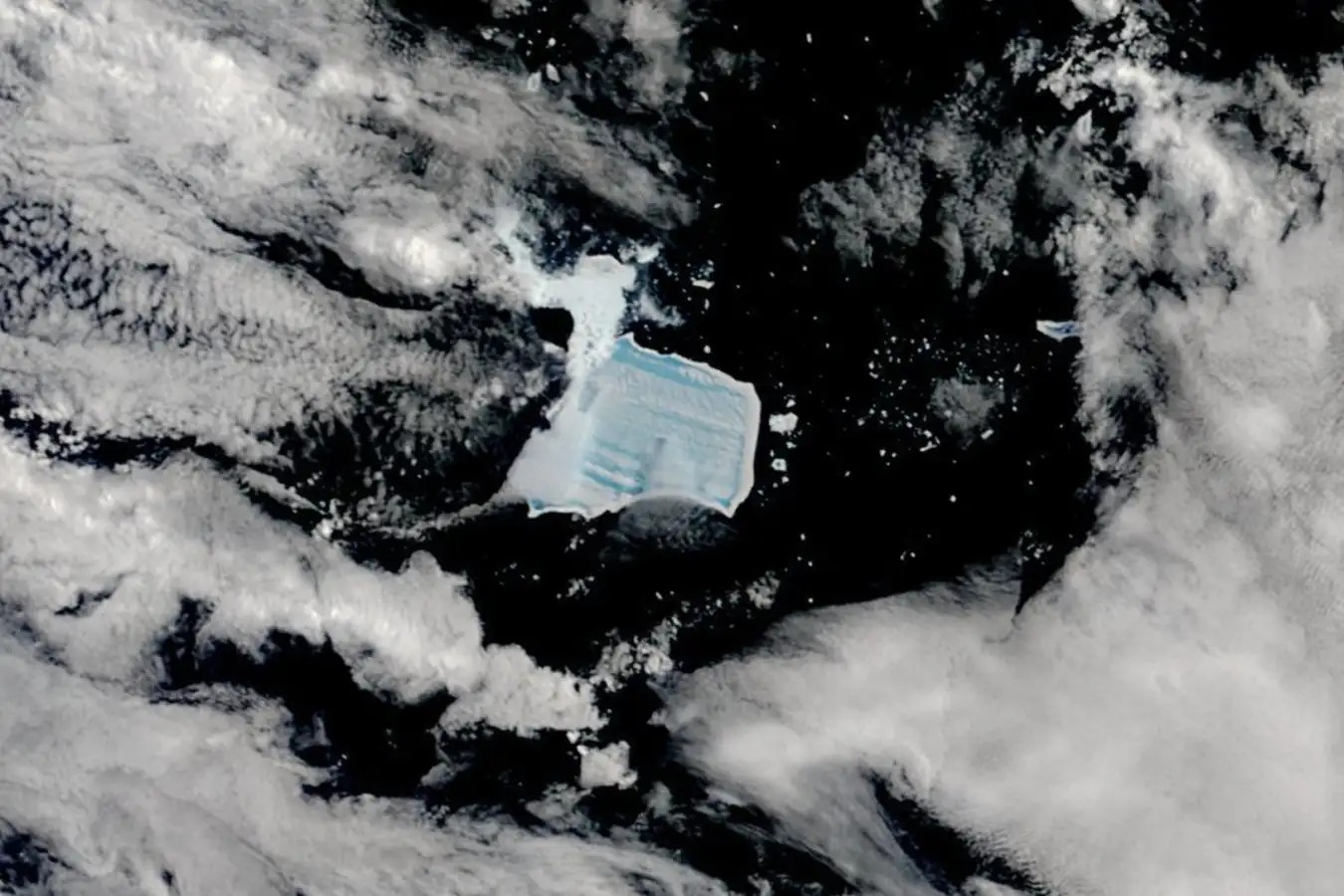
A colossal Antarctic iceberg, known as A23a and roughly the size of Chicago, is rapidly accumulating meltwater on its surface, forming a vast, naturally-contained pool. Satellite imagery reveals the startling phenomenon: a raised ice rim encircling the iceberg’s edges, effectively creating a gigantic, albeit frigid, swimming pool spanning 800 square kilometers.
The Unusual Meltwater Retention
The deep blue coloration of the pooled water – reaching depths of several meters – suggests an immense volume, likely numbering in the billions of liters. This isn’t simply water accumulating; it’s trapped. Scientists explain that the iceberg’s edges are bent downwards, forming a natural dam that prevents the meltwater from draining. This arch-like structure is common among massive icebergs, a result of wave erosion and the inherent instability of high ice cliffs.
A History of Scale and Drift
A23a has a long history: it broke off from the Filchner-Ronne ice shelf in 1986, initially more than five times its current size. For years, it held the title of the world’s largest iceberg. However, recent northward drift into warmer waters has accelerated its fragmentation. The streaks of surface water also show the iceberg’s past flow patterns when it was still anchored to the Antarctic coastline.
Imminent Disintegration
The sheer weight of the accumulated meltwater is now destabilizing A23a. If the water drains into cracks and refreezes, it will exert immense pressure, causing the iceberg to break apart. According to experts at the British Antarctic Survey, this could happen almost overnight, turning a monolithic structure into a fragmented mush. The situation underscores the accelerating effects of climate change on Antarctic ice formations.
This is not just a scientific curiosity; it’s a visible demonstration of how quickly large ice masses are changing in response to warming conditions. The breakup of A23a will further contribute to rising sea levels and altered ocean currents.