


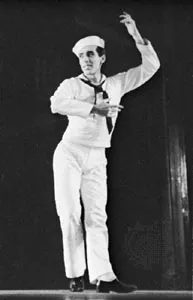
Jerome Robbins started life as Jerome Rabinowitz, but he became something else entirely on stage. Born in New York City on October 11, 1918, he grew up to dominate the American dance and theater landscape until his death on July 29, 1998. He wasn’t just a dancer. He was a choreographer and director who reshaped how we tell stories through movement.
From Ballet Dancer to Broadway Star
His career didn’t start with big musicals. It started in the trenches of ballet. He joined the Ballet Theatre—which later became the American Ballet Theatre—as a performer in 1940. But his breakthrough came when he stepped behind the curtain to create his own work.
His first major choreographic win was Fancy Free. It used a score by Leonard Bernstein. The piece was so good it got expanded into the musical On the Town in 1944. That success moved him to the New York City Ballet in 1948. He didn’t stay a dancer there long. He quickly became associate director from 1950 to 1959. During that time, he created many works for the company, proving he could lead as well as step.
The Broadway Dominance
Robbins is often remembered for his how Jerome Robbins revolutionized Broadway through sheer force of vision. He brought a specific intensity to the stage. His list of hits reads like a greatest hits album of mid-century America.
He choreographed The King and I in 1951. It became a film in 1956. Then came West Side Story in 1957. That one turned into a famous film in 1961. He also worked on Gypsy in 1959, which later had a television version in 1993. And Fiddler on the Roof in 1964.
A Unique Blend of Styles
What made his work stick? It wasn’t just technical skill. His choreography blended modern, academic, and popular dance styles. He mixed various American idioms into something cohesive. It was distinctive. It was American.
He returned to the New York City Ballet later in his career. He served as resident choreographer and ballet master from 1969 to 1983. Then he stepped up again. He became codirector alongside Peter Martins until he retired in 1990.
His legacy isn’t just in the steps he taught. It’s in the way he merged high art with street-level energy. He kept pushing boundaries until the end. We still see his influence in every sharp, emotional movement on stage today. Or do we?