A printer is an electronic device that takes digital data—text files or images—and moves it onto a physical medium like paper or film. You can hook it up directly to your computer or let it ride along on a network. The tech falls into two main camps: impact and non-impact.
Impact Printers and Dot-Matrix History
Impact printers work by physically striking the print medium. Most of these are dot-matrix models. They rely on a print head with a cluster of tiny pins. These pins pop out to form characters. Think of it like a mechanical typewriter. It is loud. It is clunky. But it is durable.
The Non-Impact Revolution
Non-impact printers don’t touch the paper in the same violent way. They split into three distinct categories.
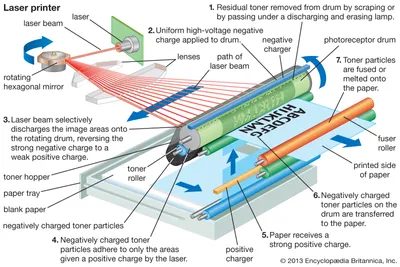
Laser printers use a laser beam. This light attracts toner to specific areas on the paper. The result is sharp text.
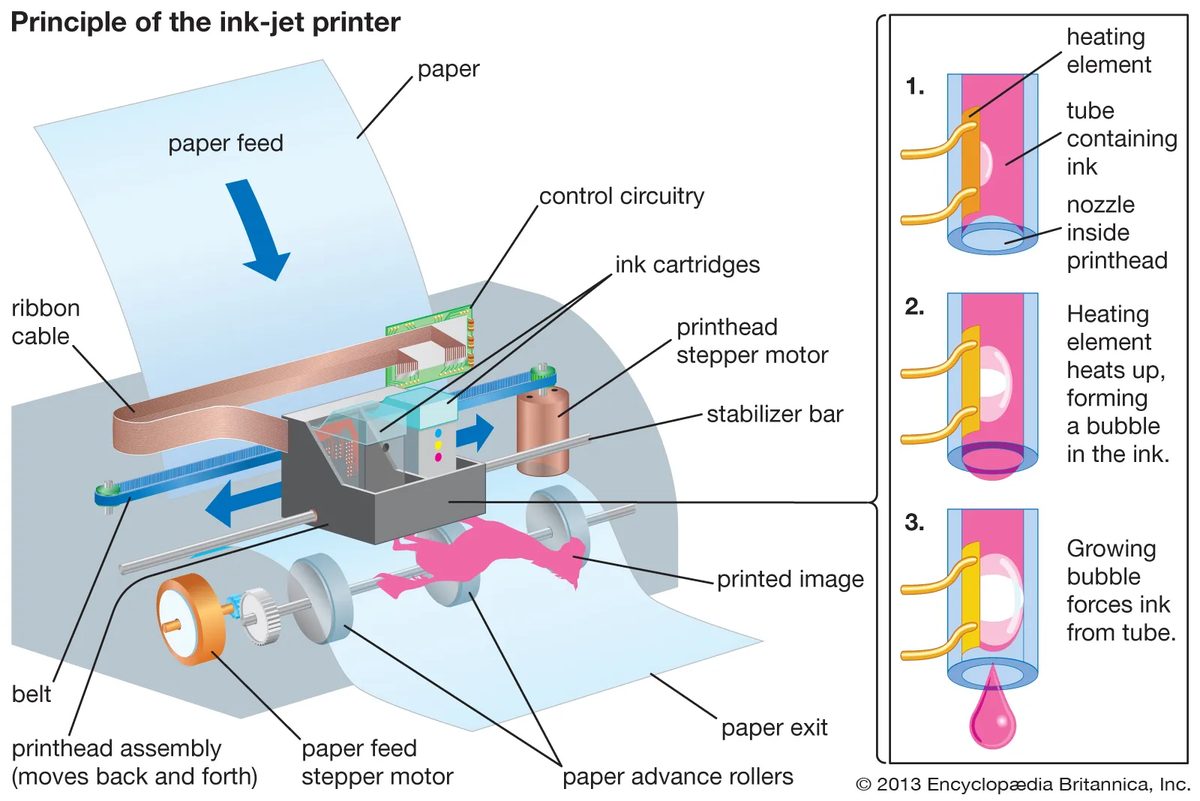
Ink-jet printers spray a jet of liquid ink. This allows for vibrant colors and smooth gradients.
Thermal printers use heat. They transfer wax-based ink or use heated pins to imprint images on specially treated paper. No ink cartridges needed here. Just heat and paper.
Key Specs That Matter
When you look at a printer, you care about a few things.
Resolution matters. It is measured in dots per inch. More dots mean a sharper image.
Speed counts too. This is sheets of paper printed per minute. Nobody wants to wait.
Color is obvious. You have black-and-white options or full-color capabilities.
Then there is cache memory. This buffer affects how fast a file prints. More memory means the printer can process complex jobs without choking.