Contract Bridge didn’t just catch on in the 1930s; it exploded. For a brief window in history, it was the international rage, a cultural phenomenon that cemented its reputation as the ultimate card game. Even today, decades after its golden age, veterans of the table admit there is always more to learn. The depth of the game is staggering. It isn’t just about holding a good hand; it’s about communication, psychology, and precise calculation.
If you are looking to dive into how to play contract bridge, you need to understand the mechanics from the ground up. This isn’t about memorizing a rulebook for the sake of it. It’s about grasping the flow of a hand. We will cover the core essentials: bidding, playing, and scoring. Once you have the basics down, you can explore variations like Auction Bridge, Honeymoon Bridge, Reverse Bridge, and Three-Handed Bridge. But first, you need to master the auction.
The Setup and Objective
Before any cards are touched, you need to know the structure. Bridge is a four-player game. The players form two pairs. Partners sit directly opposite each other. Tradition assigns these positions as North-South and East-West. This spatial arrangement is key. It dictates visibility and communication constraints.
The object of the game is straightforward but nuanced. Following an auction, you aim to score points by taking tricks during the play. The ultimate goal is to win a rubber. A rubber consists of two games. It’s a marathon, not a sprint.
You will need a standard 52-card deck. Each deal requires the full set. Experienced players often keep a second pack ready. Why? To deal the next hand immediately. Bridge moves fast once the rhythm is established. Stopping to shuffle slows the game down. Momentum matters.
The Flow of Play
Here is how a hand unfolds.
First, all cards are dealt out. There is no holding back. Every player receives thirteen cards.
Then, the dealer begins the auction. This is also called the bidding. It is the most complex part of the game.
When the bidding closes, the actual play begins. The play comprises 13 tricks in total. Each player plays one card to each trick. The winner of the trick leads to the next one.
Understanding the Bidding
Most card games with auctions are simple. You bid a number. The highest wins. Bridge is different. It allows for a creative and complex auction. This complexity is what makes it the “ultimate” game.
The bidding is where partners communicate. They share information about their hands without revealing too much. They negotiate a contract. The contract determines the suit that will be trumps and the number of tricks required to win.
Why is the bidding so special? Because it is a language. You are encoding your hand into a series of bids. Your partner decodes it. It’s a puzzle within a puzzle. If you get the bidding wrong, you might fail the contract. Even if you have the best cards, poor communication can lead to defeat.
“Bridge is special in allowing players to have a creative and complex auction.”
This complexity separates Bridge from simpler trick-taking games. It requires you to think several steps ahead. You must anticipate your partner’s response.


The Bridge Auction That Defied Logic
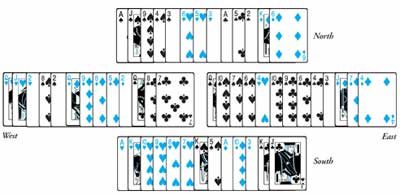
West dealt. West passed. North opened with one diamond, the standard call to start the engine. East passed, keeping quiet, and South jumped to two hearts. It looked like a simple preference, showing support but perhaps a bit of weakness. West passed again. North, however, didn’t stop there. He jumped to three diamonds. That wasn’t just a sign-off; it was a probe. East passed. And then South did the unthinkable. He bid six diamonds.
Not a slam invitation. Not a cautious four-notrump. Six. The contract.
It wasn’t a mistake. It was a statement. South saw something in the hand that the rest of the table missed. He saw the distribution. He saw the fit. He saw that if he played his cards right, twelve tricks were not just possible—they were probable. The auction ended. West led. The hand was played. And it worked.
Why did South go straight to six? Because he knew the diamonds would run. Because he knew the heart suit was solid. Because he knew that if he waited, if he bid four diamonds first, he might lose the initiative. He took the risk. He trusted his judgment. And he won.
This is bridge. It’s not just about points. It’s about reading the room. About knowing when to push and when to pull. South pushed. And the table paid.

The High-Stakes Bid in Bridge
South makes a bold move. He bids to take 12 out of the 13 tricks available. It’s a risky play. He expects it to happen. The other three players pass. South is the first to bid **
This kind of confidence can be thrilling. Or terrifying. Depends on who’s holding the cards.

How the Winning Bidder Claims the Trump Title in Bridge
For the lucky winners, the auction ends, and they step into the spotlight as declarer. But what does that actually mean? It means they’ve secured the right to dictate the terms of the hand. In Bridge, every side fights for control. The dealer kicks off the bidding. You don’t just guess. You bid.
A bid consists of a number from 1 to 7, followed by a suit. Or no suit at all.
When you bid, you’re essentially saying, “My team can win this many tricks.” The number tells you the level. The suit tells you the trump. If there’s no suit, you’re playing no-trump. That’s a different beast entirely. No trump cards to win tricks automatically. Just pure high-card power.
The winning bidder becomes the declarer. Their partner becomes the dummy. The other two? They’re the defense. Simple. Brutal. Elegant.
“The declarer plays both their own hand and the dummy’s cards.”
This is where the game shifts. The declarer has to plan every move. They see all the cards. They know what the defense might hold. But they can’t see the future. That’s the thrill.
The defense? They’re guessing. They’re trying to read the declarer’s mind. They’re looking for tells. In Bridge, there are no tells. Just logic. And luck. And the occasional mistake.
Why does this matter? Because the declarer’s choices determine the outcome. A single misread can cost you the contract. Or it can set up a stunning finesse. It’s chess with playing cards. Except the board changes every hand.
Why the Bidding Structure Defines the Game
The numbering isn’t random. 1 is the lowest. 7 is the highest. 7 means you’re trying to win all 13 tricks. That’s rare. Usually, you’re aiming for 6. Six tricks above six. That’s a common contract. It’s safe. It’s solid. It’s also where most beginners get stuck.
The suit matters. Hearts and spades are major suits. Clubs and diamonds are minors. Not all bids are equal. A bid of 2♥ is worth more than 2♦. Why? Because majors score higher. The points stack up. The score reflects the difficulty.
When the auction ends, the last bid stands. The bidder becomes declarer. Their partner exposes their hand. The play begins. The defense leads the first card. And just like that, the theory becomes practice.
You don’t get to rehearse. You don’t get to pause. You react. You calculate. You hope.
That’s Bridge.


How Bridge Bidding Actually Works
The game hinges on a simple math problem. You look at your hand. You count the cards in a specific suit. Add six to that number. That sum is your bid. It tells your partner exactly how many tricks your partnership intends to win, assuming that suit becomes trumps.
It’s not just guessing. It’s an auction.
Every time the turn rotates to you, you have a binary choice: bid or pass. If you pass, you say nothing. You stay in the game, but you stay silent. If you bid, you’re making a claim. The strategy is straightforward. You want to bid a suit where your side holds more cards than the opponents. More cards usually means more power. More power means winning tricks. Win enough tricks, and you win the hand.
The Vocabulary of the Table
Bridge has its own language. It’s dense. If you don’t speak it, you’re just watching people move plastic around. Here is the essential lexicon you need to navigate the table without looking lost.
The auction is the bidding process itself. It determines the contract. The contract is the number of tricks the declarer must take to fulfill their promise. The declarer is the player who won the auction. They are the one trying to make the deal.
Their partner becomes the dummy. Once the play begins, the dummy’s hand is laid face up on the table. The declarer plays cards for both sides. It’s a strategic nightmare for the opponents.
When the bidding gets aggressive, you’ll hear about doubles. A double is a bet. You are betting that the opponents will fail. If they make their contract, you lose extra points. If they get set (defeated), you gain points. A redouble is when someone doubles your double. It raises the stakes even higher.
Suits are split into categories. Majors are hearts and spades. Minors are diamonds and clubs. Your distribution matters. A singleton is one card in a suit. A void is zero. These voids are dangerous. They can be powerful, or they can be liabilities, depending on who holds the trump suit.
Vulnerability changes the scoring. You are not vulnerable if you haven’t won a game in the current rubber. A rubber is simply two games. Once you win a game, you become vulnerable. The penalties for going undertricks (falling short of your contract) increase significantly. That’s why experienced players guard their vulnerability status like a secret.
Other calls define the flow. An overcall is a bid made after opponents open. A raise is a bid in a suit your partner already bid. A response is your call after partner opens. A rebid is your second chance to speak. If you ruff, you are trumping.
There are thousands of other terms. The language is old. It’s rigid. But it’s the only way to communicate in the chaos of a bridge hand.
The Lowest Bid
Everything starts low. The minimum opening bid is one level. It requires you to promise six tricks plus one. Seven tricks total. If you have more strength, you bid higher. Seven, eight, all the way up


Think of a contract as a binding promise. If you bid 7♣, you’re betting your side can grab at least seven tricks with clubs as trumps. It’s straightforward. You need the cards. You need the count. 7♦ follows the same logic but swaps the trump suit for diamonds. Then things get specific. A bid of 3♦ means you’re aiming for nine tricks, diamonds still ruling the deck. Switch to 3NT, and the rules change entirely. No trumps. Just nine tricks played from the other suits.
The auction doesn’t care where you start. Any opening bid works. Once the cards are in play, the rhythm takes over. You take turns. Pass. Bid. Double. Redouble. The frequency of doubles varies by table, but the pressure is constant. Here’s the hard rule: every new bid must beat the last one. You can’t repeat a level. You can’t stay flat.
But you don’t always have to increase the trick count. You can switch suits. Clubs are low. Diamonds are higher. Hearts beat diamonds. Spades beat hearts. So, if the previous bid was 2♦, you can bid 3♣? No. Wait. Clubs are lower than diamonds. That’s illegal. You’d have to bid 3♦ or higher to increase the tricks, OR you can jump to a higher-ranking suit at the current or lower trick level. For example, if someone bids 2♦, you can bid 3♣? No, clubs are lower. You can bid 3♥. That’s a higher suit. It beats diamonds. And you’re promising three tricks. The trick count didn’t go up. The suit rank did. That’s the loophole. That’s how you steer the ship without committing to more labor.


How Bridge Suit Rankings Actually Work
If you’re trying to figure out which card holds more weight at the table, start with the suits. They sit at the bottom of the hierarchy, ordered strictly alphabetically. Spades come last. Hearts follow. Diamonds are next. Clubs take the lowest spot among the four. It’s that simple.
The easiest way to remember the suit ranking is that the four suits rank alphabetically.
But there’s a twist at the top. No Trump, often abbreviated as NT, doesn’t play by the alphabet. It sits above them all. It’s the highest ranking option in the game. When a contract is declared in No Trump, it bypasses the suit order entirely. This makes it the most powerful designation available to a bidder.
In Bridge, this structure dictates strategy. You don’t just bid based on point count. You bid based on suit quality and volume. Knowing that Spades outrank Hearts isn’t just trivia. It’s the difference between making a contract and going down. The alphabetical trick works for the suits. NT requires a separate mental note. It’s the outlier. The king of the hill.


The hierarchy is rigid. If you bid in a suit starting from two spades or hearts, you are playing at the major suit level. Low suits like diamonds and clubs sit lower on the ladder, categorized as minor suits. But you aren’t trapped in those lanes. As soon as you climb higher in the bidding sequence, the board opens up. You can bid in any suit or choose No Trump (NT), effectively bypassing the minor/major distinction entirely.
The auction doesn’t go on forever. It stops the moment three consecutive players pass. That silence is final. The last spoken bid locks in the contract. This single decision determines who holds the power for the hand.
Who actually plays the cards? The declarer. This title belongs to the partner who first mentioned the winning suit during the auction. It’s not about who made the last bid, but who introduced the suit that ultimately wins the contract.
Take the hand described in the previous section. South isn’t just a random player here. He is the declarer because he was the first to bid that specific suit. His opening bid set the trajectory. East and West might have passed later, but South’s voice established the trump. That’s the rule. That’s the structure.
The declarer is the partner who first bid the winning suit, not necessarily the one who made the final call.
This distinction matters. It dictates who sees both their own hand and the dummy’s cards. It dictates who plans the play. It dictates who bears the burden of making the contract. One bid. One suit. One declarer.

Don’t let the other players peek at your cards during the auction. That’s rule number one for keeping the game honest and your strategy intact.
When the bidding gets competitive, you have the option to double or redouble. If your opponent makes the latest bid, you can say “double.” This raises the stakes. If you fulfill your contract, you win twice the points. But if you fail, you lose twice as much. The risk is real. After a double, either opposing player can redouble to raise the stakes even further. Three passes end the auction, which means the final contract is often doubled or redoubled. This significantly impacts the final score.
Bidding Strategies for Beginners
Figuring out what to bid when you first start playing bridge is confusing. It takes practice to understand the nuances. We aren’t going deep into complex strategy here. Books could be written on this alone. But there are basic guidelines to help you get started.
Start by arranging your hand by suit. Then assign points to your cards:
* Aces: 4 points
* Kings: 3 points
* Queens: 2 points
* Jacks: 1 point
* Singletons (one card in a suit): 1 point
* Voids (no cards in a suit): 2 points
Add them up. Look at your cards. Which is your strongest suit? To bid a suit as trump, aim for four or five cards with at least one or two high cards. If you have 16 to 18 points and an even distribution across suits, consider bidding no trump.
The general rule is to open the bidding only if you have 13 or more points. Of course, if your partner has already bid, the rules change. Your partner is signaling they have enough points to open. They are asking if you can support their suit or if you have another suit to introduce. When answering an opening bid, you need at least 6 to 8 points to support their suit. If you’re introducing a new suit, aim for 8 to 10 points. If your partner passes and you have fewer than 13 points, it’s often wise to pass as well.
As you and your partner bid back and forth, try to calculate your combined points. If you believe your partnership has 28 or more points, you likely have enough to bid a contract of 4. For a bid of 6, you need 33 points. For a grand slam (bid of 7), you need 36 points. There are many other conventions, but these cover the essentials.
Every rule has exceptions. Pay attention to your opponents’ bidding. Maybe they are bidding a suit that is strong in your hand. You must decide whether to let their bid go through and try to set them, or to win the contract yourself and earn game points. This decision depends on what your partner has bid and your own point count.
Once you understand the auction, you are ready to play the hand.
Contract Bridge Play
After the bidding finishes, the play of the hand begins. Here are the rules:
The player to declarer’s left leads the first card. This is the opening lead. In the sample hand, West leads first. Once the opening lead is made, the dummy hand (declarer’s partner, North) is placed face-up on the table.
Declarer’s partner is now out of the round. The declarer plays both their own hand and the dummy. South rearranges the dummy hand to show trumps.

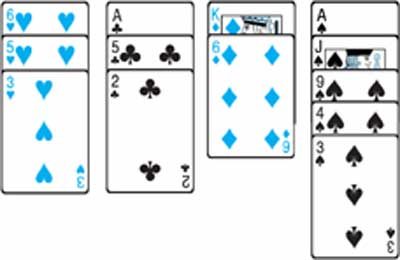

The action hinges on the player seated to the left, as you can see in the diagram. But let’s get to the mechanics. When it’s dummy’s turn to play, declarer makes the call. They pick the card. Declarer either plays it themselves or directs dummy to lay it down. It doesn’t matter who physically moves the card, just that the right one hits the table.
Every hand must follow suit. If you have the led suit, you must play it. If you’re short? You’re free to ditch any card. Trump included. The winner of the trick takes the lead for the next one. No strings attached.
Once the opening card hits the table, the rules tighten up. Follow suit if you can. Can’t? Then you’re off the hook. Play anything. A trump card works fine if you’re void in the lead. The highest trump wins. Or the highest card in the suit led, if no trumps came out. Winner leads next. Simple enough.
If dummy takes the trick, the board leads the next one. Not the player who played from dummy. The board itself. It’s a specific quirk of the game that trips up beginners.
Then there’s the trump rule. The first time trump is played, it’s “broken.” You can’t just lead trump willy-nilly. Wait until it’s broken. Unless you have no other suits left. Then you can lead trump early. Desperation plays.
Take a look at a sample round. We’re using the hands from page one. West starts things off. West leads the


East’s Hold-Up Game Traps South
South takes control of the East’s J with the A. But the real drama starts at tricks two and three. South decides to cash out, pulling the A and K from their own hand. It’s a standard play. Or so it seems.
But here’s where the defense flips the script. By refusing to win those earlier tricks, East has forced South into a position where they run out of safe exits. When South finally leads another card, the defense steps in and wins the trick they’ve been waiting for.
The key isn’t winning early. It’s knowing when to let the opponent shoot themselves in the foot.
This is a classic hold-up maneuver. East sat on their winner, waiting for South to exhaust their own high cards. Once the A and K were gone, East’s remaining cards became winners. South didn’t see it coming because they were focused on taking tricks, not managing the endgame.
Why This Matters for Bridge Players
If you’re playing bridge, this isn’t just a neat trick. It’s a fundamental lesson in patience. South assumed that cashing high cards was safe. They didn’t consider that East might be holding back a winner. The result? South loses a trick they could have avoided.
For players who want to level up their game, understanding these subtle defensive plays is essential. It’s not enough to know how to win tricks. You need to know when not to win them. East’s move shows that sometimes, the best play is the one you don’t make.


West had already discarded their Jack and two, leaving the Queen tucked away for the endgame. South didn’t blink. On the fourth trick, they led the three toward dummy.


South leads the King of clubs to the dummy. It looks clean. Standard play. But then the hand takes a sharp left turn.
South follows up with the 10 of clubs. West, sitting in the fourth seat with a quiet heart (or maybe just a cold calculation), slaps down the Queen of clubs. A nice touch. Or is it?
South doesn’t hesitate. He ruffs it. He uses the last trump in the dummy to kill West’s high card. Efficient? Maybe. Correct? That’s where it gets messy.
The problem isn’t the ruff. It’s what comes next.
West’s high trump remains. And in bridge, a lone high trump in the wrong hand is the difference between a contract made and a contract gone into the cellar. By using up dummy’s trump to kill the Queen, South has stripped the dummy of protection. West holds the last, high trump. And he’s waiting.
When West gets the lead—and he will, eventually—he can cash out. Or worse, he can ruff a winner in dummy. The defense doesn’t need much. Just one entry. Just one moment.
The Trap in the Ruff
Why does this matter? Because many players see a loser and try to eliminate it immediately. South saw the Queen and thought, “I can throw this away.” He didn’t stop to ask, “What do I have left?”
The dummy’s remaining trump was supposed to be a shield. Not a sword. By using it offensively, South removed his own defensive layer. West’s high trump is now king of the suit. Unchecked.
Where the Hand Goes Wrong
This isn’t just about one trick. It’s about trump management. Good players preserve high trumps in the hand that can control the suit. Bad players spend them on low-stakes ruffs.
South’s mistake is subtle. It’s not a blunder. It’s a misjudgment of value. The Queen of clubs is not worth the last trump in dummy. Not if dummy needs to win a trick later. Not if West holds a higher trump.
The Lesson for Home Players
Next time you’re tempted to ruff, ask yourself three questions:
- Do I have a higher trump left in the other hand?
- Can my opponent trump me later?
- Is this ruff actually creating a winner, or just avoiding a loser?
If the answer to any of those is “yes,” pause. Don’t rush. Bridge is slow. Rushing is how contracts die.
West’s Queen of clubs looked like a threat. It wasn’t. The real threat was the silence in the dummy’s trump suit. And by the time South notices, it’s too late.

You’ve got the bidding down. You know how to navigate the auction. But none of that matters if you don’t know how points actually stack up. Winning tricks is only half the battle. The other half is ensuring those tricks translate into a win on the scoreboard.
Let’s get practical.
Making the Contract
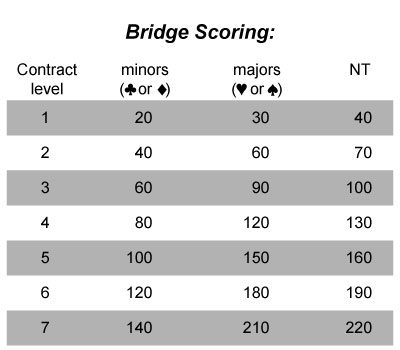
Once the final trick is played, the result is binary. Did the declarer take at least the number of tricks they bid? If yes, the declaring side scores. If no, they go down. Simple enough. But the points? Those follow a strict table.
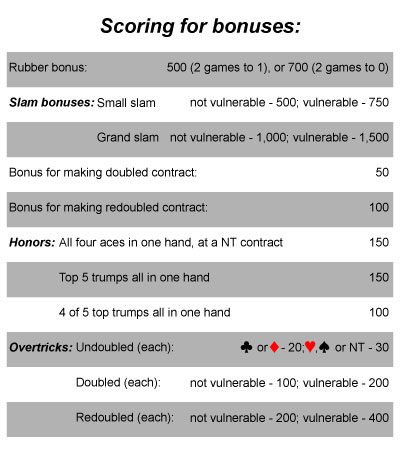
If you make a contract of 6, it’s called a small slam; a grand slam is a made contract of 7 bids.
Here’s the catch. Bonuses exist for slams. But they aren’t given lightly. You don’t get credit for a slam just because you accidentally won six or seven tricks. You have to bid them. If you win the tricks without the bid, you get trick points. That’s it. No slam bonus. The bid must be made before the play begins.
The Psychology of Scoring
Why does this matter? Because Bridge isn’t just about winning tricks. It’s about optimizing value. A player might choose to bid a smaller contract to secure a safe bonus rather than risk a slam. Or they might overbid, hoping the opponents will double them into oblivion. Scoring drives strategy.
Think about it. If you’re up by 500 points, is a 10-point swing worth the risk? Usually not. But if you’re down, you’ll gamble. The system rewards precision. It punishes overconfidence. And it loves a well-timed double.
Beyond the Basics
The contract scoring table isn’t static. It changes based on vulnerability, suit, and level. But the core rule remains: bid it, then make it. Anything else is just noise.
This is the sample Bridge hand shown earlier. The bidding was aggressive. The play was tight. Now, look at the numbers.
The declarer made seven tricks. They bid seven. Grand slam. Bonus applied. Total score: substantial. The defenders had chances to stop them. They didn’t. So the contract succeeds. South wins all the tricks. And the scoreboard reflects it.

How Scoring Works When Contracts Fail
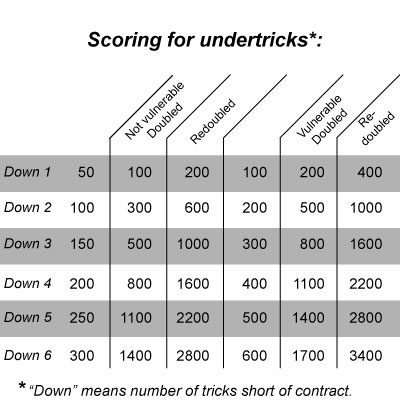
The real tension in bridge often hides in the “below the line” section of the scorecard. This is where you track the points earned by successfully completing a contract. But what happens when it doesn’t? When a contract goes down, the dynamic shifts instantly. The opponents don’t just get a pass; they actively score points for the undertricks.
An undertrick is simply the number of tricks the declaring side fails to take against their bid. If you bid three and only take two, that is one undertrick. If you bid six and make five, you are down one. The defending side collects penalties for every single one of these failures.
The specifics of these penalties can vary depending on vulnerability and whether the contract was doubled or redoubled, but the core mechanic remains the same. The declaring side’s mistake becomes the defending side’s reward. You can see the exact point values for these scenarios in the chart referenced in the source material. It’s a straightforward transfer of value: failed ambition on one side means concrete points on the other.

The Race to Two Games
Get the contract wrong and the opposition doesn’t just win the hand. They score for undertricks based on the chart you’re looking at. It’s a penalty, sure, but it’s also a way to chip away at the other side’s progress.
Here’s the thing about Rubber Bridge scoring that trips people up. To win the rubber, you need two games. Not just any points. A game specifically means 100 points in tricks bid for and actually won, using the scoring table provided. It sounds simple enough until you realize you can secure a game in a single deal.
Take 3 NT. That’s 100 points. Boom. Game.
Or look at a successful contract of 4. Depending on the suit, that’s 120 points. Or 140 if you’re playing in a major. Either way, you’ve crossed the threshold. You’ve got your first game on the board. But you’re not done yet. You need another one to close out the rubber.
This is where the strategy gets messy. You can’t just blast through deals trying to hit 100 points every time. Sometimes you have to sacrifice. Sometimes you have to defend. The scoring table isn’t just a reference; it’s a roadmap to victory. And if you ignore it, you’re just guessing.


You aren’t always chasing the grand slam. In fact, most of your points come from the grind. Take a look at the math. Four, five, and another five—that’s already 100 points in the bank. Simple. Direct. You don’t need to bid game to win. You just need to close the deal.
This is where part-scores come in. Also known as partials, these are series of deals where the final contract sits below the game threshold. You bid low. You make it. You collect. It’s a steady accumulation of points, not a all-or-nothing gamble.
Think of it this way: you might bid and make 2. That’s not a game. But it puts points on the board. Repeat that strategy. Stack those small wins. Suddenly, you’re ahead without ever touching the game bid. It’s slower. It’s less flashy. But it works.
The key is consistency. Small victories add up faster than you think.
So, which approach suits your style? The high-stakes game or the steady partial? There’s no right answer. Just what keeps you in the game. And usually, the game isn’t over until the last hand is played.


How Bridge Scoring and Vulnerability Work
It’s a classic dilemma at the table. On one hand, you bid one, secure 40 points. On the next, you push for two, landing 60. Add them up, and you hit 100—the magic number for game. Once a side claims that game, the rules shift. That team becomes vulnerable. If both sides have already won a game, both are vulnerable. If neither has, neither is vulnerable.
Why does it matter? Because defenders earn significantly more points when they set a vulnerable contract. It’s the difference between a sting and a stake. Doubles and redoubles also inflate the score for the winning side, but here’s the catch: extra tricks, those overtricks made beyond the contract, don’t count toward the game itself. They’re just bonus points.
Scorekeeping is usually a shared burden. Most pairs stick to preprinted Bridge score pads. Others prefer the old-school method of drawing lines in a cross. It’s simple. It’s direct. It keeps the math visible.

How Bridge Scoring Divides the Ledger
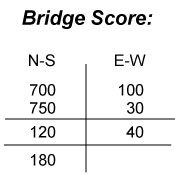
The bridge scorecard isn’t just a place to scribble numbers. It is a strict ledger where rules are enforced by a single horizontal line. That line separates contract points from everything else. Below the line, you track progress toward game. Above it, you tally the rest. Overtricks. Penalties. Bonuses. They all live in the upper territory.
Consider a specific scenario to see the split in action. Imagine East-West open the bidding at 1NT. They press on to 2NT and actually make the contract. The math here is non-negotiable. Forty points go below the line. This is the contract value. It counts toward their game total. But the hand didn’t end there. They took an extra trick beyond the contract. Thirty points score above the line for that overtrick. The line does the heavy lifting. It keeps game progress distinct from immediate gain.
Now, look at the other side. North-South come in strong. They bid 4. This is a different beast entirely. A four-level contract requires thirty tricks points to reach game. If they make it, the points below the line will trigger a game bonus. But if they go down? The penalties score above the line. The distinction matters. You don’t get credit for a game if you only scored points for overtricks or defense. The line protects the integrity of the game goal.
Why split it this way? It forces players to weigh risk against reward differently. Below the line, you are building. It’s cumulative. Above the line, it’s transactional. One trick, one point. The separation ensures that a player cannot accidentally claim a game bonus just because they won a lot of tricks in a low-level contract. The line is the gatekeeper.
The horizontal line is the only thing keeping game progress and immediate points from becoming a muddled mess.
This structure also clarifies doubling scenarios. If you double a contract, any penalty points go above the line. It doesn’t matter if the opponents were bidding for game. The penalty is immediate. It doesn’t contribute to their game total. It just hurts their score. Conversely, if you are defending and your opponents fail, your points for down tricks are strictly above the line. You don’t get closer to game by setting them. You just win the battle, not the war.
The diagram shows the initial 2NT bid. Forty below. Thirty above. Simple. But then N-S bid 4. This bid changes the stakes. It’s a commitment. If they make four, they get the game bonus. If they fail, the penalties stack up above the line. The line remains. It doesn’t move. It doesn’t care about your strategy. It just records where the points belong.
Some players ignore the line. They tally everything in one column. It works until tournament time. Or until they forget how game bonuses are calculated. Then the confusion sets in. Is a doubled overtrick worth more? Yes. Does it go below the line? No. It goes above. The line is non-negotiable. It is the first thing you check when the scoring gets complicated.
You might wonder why part scores don’t carry over. They do. But only the points below the line. If you score 60 below in one hand, it counts. If you

The score hit 120. One more line drawn under that number meant the hand was won. But here is the trick that catches beginners: East-West’s 40-point part-score vanished into thin air. They kept those points, sure, but both sides reset to zero for the next game. They were hunting for the next 100 trick points, starting from scratch. North-South had the lead. They immediately bid 3.


The swing was brutal in the other lane. East-West squandered their vulnerability, dropping a trick they should have held. That single error cost them 100 points above the line. Simple math, heavy consequences.
North-South didn’t make the same mistake. They bid six. And they made it.
The payoff? A tidy 180 points in the trick score column. But the real money is in the bonuses. Because they were vulnerable, the small slam bonus added another 750 points above the line. Then came the rubber. They won the rubber two games to none. That’s a flat 700 points above the line.
Do the math. N-S walks away with 1,750. E-W? 170.
One good contract. One bad one. A 1,580-point swing in a single deal. That’s why rubber bridge scoring feels so high-stakes compared to duplicate. You aren’t just counting tricks. You’re counting history. Every board matters because it contributes to the rubber. A missed slam bonus isn’t just 750 points. It’s momentum. It’s the difference between closing the book on the rubber or going back to square one.
Below is a list of scoring for bonuses and overtricks.

You’ve got the basics down. You know how to count tricks, you’re starting to track which cards have vanished from the deck, and you’re comfortable with the magic number 13. That’s the sweet spot. But if you think Contract Bridge is the only game in town, you’re missing a huge chunk of card history.
There are older, weirder, and sometimes faster ways to play. Variations like Auction Bridge, Honeymoon Bridge, Reverse Bridge, and Three-Handed Bridge offer different flavors of the same complex strategy. They change the rules of engagement. They change how you win.
Let’s look at the heavy hitter first: Auction Bridge.
The Golden Age of Auction Bridge
Auction Bridge wasn’t just a precursor; it was the king. From roughly 1900 to 1930, this was the version everyone played. Contract Bridge didn’t knock it off the throne until the 1930s. The mechanics? Nearly identical. Four players. One standard 52-card deck. The auction procedure. The rules of play.
The difference? Purely in the scoring.
In Contract Bridge, you need to bid exactly what you can make. You get bonus points for going over (overtricks). You get huge bonuses for making your contract. But if you fail? You get penalized. It’s precise. It’s tense.
Auction Bridge is looser. It’s more chaotic.
The goal is simpler: take enough tricks to score “game” and “slam” bonuses. You don’t care if your bid was realistic. You don’t care if you were supposed to make exactly seven tricks. If you take nine? You still get the points for taking nine. The bidding height doesn’t dictate the scoring floor. You just score based on the tricks you actually win.
In Auction Bridge, if you take enough tricks, you score game and slam bonuses without regard to how high the bidding ended.
A rubber ends when one side scores two games. That’s it. No more, no less. And in this version, a game is 30 points in trick-score.
This distinction matters. It changes how you play. In Contract, you’re a surgeon. In Auction, you’re a gambler.
Why the Shift to Contract?
So why did Auction Bridge die? Why did we all switch to the stricter Contract rules?
It comes down to skill. Auction Bridge rewarded luck. You could bid low, hope for the best, and still score big if the cards fell your way. It was easier to learn. It was more forgiving. But it wasn’t as deep.
Contract Bridge forces you to communicate with your partner. You have to bid accurately. You have to trust that your partner knows what they’re bidding. If you bid wrong, you pay for it. If you bid right, you’re rewarded. It’s a game of information and inference.
Auction Bridge is about counting cards. Contract Bridge is about reading people.
That’s why it stuck. That’s why it’s still the standard. But Auction Bridge has its fans. Old-timers love it for its speed. It’s less about memorizing complex conventions and more about watching the table. Who is hesitant? Who is aggressive? The


Bridge scoring can feel like a math test, but the structure is actually quite logical. Once you understand the mechanics, the strategy becomes less about arithmetic and more about risk management. In standard Auction Bridge, points are scored below the line for tricks made. Not surprisingly, NT (No Trump) contracts carry different weights than suit contracts. You get 6 points for a club trick, 7 for diamonds, 8 for hearts, and 9 for spades. NT tricks are worth 10 points each. These points accumulate toward 30, which completes a game. Both sides reset to zero when that first game is won. The real prize comes at the end of the rubber. Winning two games before your opponents do nets you a massive 250-point bonus.
Slams change the payout structure entirely. If you manage to win 12 of the 13 available tricks, you secure a small slam bonus of 50 points. Taking all 13 tricks—a grand slam—earns 100 points. Doubled or redoubled contracts alter the trick value significantly. Making a doubled contract doubles the trick score. A redoubled contract quadruples it. Overtricks also matter. If you exceed the contract in a doubled deal, each extra trick is worth 50 points. Redoubled overtricks jump to 100 points. Failing to make your contract is expensive. You lose 50 points per undealt trick, 100 if doubled, and 200 if redoubled.
Honors add another layer of complexity. These are the top five cards in the trump suit: Ace, King, Queen, Jack, and Ten. If you hold three of them, possibly split between your hand and partner’s, you get 30 bonus points. Four honors in one hand bumps that to 80 points. Five trump honors in a single hand earns 100. If you have four trump honors in your hand and the fifth is with your partner, you get 90 points. In No Trump, the focus shifts to aces. Holding all four aces in one hand awards 100 points. Three aces split between partners gives 30 points. Four aces split earns 40. Five honors in one hand, regardless of suit, also nets 100 points.
The bidding in Auction Bridge is less sophisticated than in Contract Bridge. The goal is often to buy the contract at the lowest possible level. You might not always identify the optimal suit for your side, but that is part of the game. Look for every opportunity to take tricks. The chance to win a game or slam exists on every single hand. Don’t settle for safe plays if aggressive ones offer a better payoff.
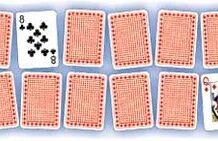
Honeymoon Bridge offers a different experience entirely. It is one of the most popular variants for two players. The setup is intimate. Players sit next to each other, not opposite. This creates a dynamic where you see your partner’s exposed cards constantly. The dealer deals four hands. Each player gets a “dummy” hand alongside their own. The dealing process is specific. First, two rows of three cards are dealt face down. Then, one card is placed face up on top of each face-down card. The last card is dealt face up next to the rows.
Bidding follows normal Bridge rules, but a single pass ends the auction immediately. Play is where it gets interesting. Each player controls the cards in their partner’s dummy hand across the table. The player to the declarer’s left makes the opening lead. During the play, you can only select cards from the exposed cards in your dummy. Once a trick is finished, you turn up any uncovered card in your dummy. That newly revealed card becomes playable. This constant visibility changes the strategic landscape completely. You are never guessing where your partner’s high cards are.
Reverse Bridge takes the rules and flips them upside down. It is a four-handed game where the objective is entirely opposite to standard Bridge. Instead of trying to win tricks, you try to force your opponents to take them. If your side wins a final contract of 4, you have failed. The scoring penalizes you for taking tricks when you should have passed


You are on the hook to ensure your opponents take exactly ten of the thirteen tricks when spades are trumps. The upside? You claim the score for whatever contract you successfully force them into. It is a strange twist on the usual goal.
Scoring and Strategy Shifts
Standard bridge strategy relies on conserving high cards to win tricks later. This variation flips that logic. You play the highest card you can that is still likely to lose. The goal is to lose the trick, but on your terms. When your side does win a trick, play high cards from both hands. This preserves your lower, losing cards for use elsewhere in the hand. It feels counterintuitive until you see the math work out.
Three-Handed Bridge
Waiting for a fourth player is a common hurdle in casual bridge. It leaves three people stranded. Several methods exist to let three players compete. None replicate the full four-handed experience. But some are playable and fun.
Player Count: Three
Setup: Deal four complete hands. Leave one hand face down on the table opposite the dealer. This is the dummy. Four cards from this dummy hand are turned up immediately. The remaining cards stay hidden.
Bidding: The dealer starts the bidding. Two passes end the round. The winner becomes the declarer. They sit opposite the dummy hand on the table.
Play: The opening lead happens first. Then the declarer flips over the face-down dummy cards. This reveals the rest of the dummy’s holding. The declarer uses this new information to plan their line of play. The other two players defend together.
Scoring Nuances: Points follow standard Contract Bridge rules. Tracking scores gets messy with three people. A contract can be doubled or redoubled. These penalties apply only to the two players in the contract. The third player scores for an undoubled contract if applicable. It requires attention to detail.
Why Play Variations?
You have now covered two four-player variations. You know the two-player version. You know the three-player setup. The skill gap narrows quickly once you practice these formats. You will become a formidable player without waiting for a full table.
Bridge Game FAQ
How many players are there in bridge?
Four. They form two pairs. Partners sit across from each other. Tradition labels them North-South and East-West.
How do you win bridge?
One partnership scores by making their bid. The other scores by defeating it. The partnership with the most points at the end takes the win.
How do I play bridge online with friends?
Download Fun Bridge on your smart device. It lets you queue up friends for a game.