


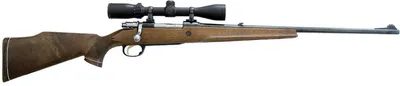
You can’t understand the modern rifle without looking at the inside of the barrel. It’s not smooth. It’s lined with shallow, spiral grooves. These twists aren’t just for show. They force the projectile to spin as it leaves the muzzle. That spin stabilizes the bullet in flight.
This simple mechanical fact changes everything.
Compare this to a smoothbore barrel. A smoothbore fires less accurately. The projectile wobbles. It drifts. A rifled barrel keeps the shot true. The name rifle usually refers to a weapon fired from the shoulder. But it can also describe heavier, crew-served weapons. Rifled cannons exist. Recoilless rifles exist. Field guns, pistols, and machine guns often have rifled barrels too. We don’t call them rifles though. We call them what they are.
The technology is old. Much older than most people realize. Rifled firearms date back to at least the 15th century. The earliest versions didn’t even have spiral grooves. They had straight cuts. Why? Gun makers were trying to solve a problem. Early firearms fouled up quickly. Powder residue clogged the barrel. Straight grooves might have been designed to catch that gunk.
But someone noticed something else. The spiral cuts made the bullets spin. And spinning did more than just catch dirt. It improved range. It improved accuracy. The effect became even more pronounced when shooters stopped using spherical balls. They started using elongated projectiles. The spin kept those longer shapes stable.
The twist in the barrel isn’t just history. It’s the fundamental reason a rifle is a rifle.
This shift from smooth to rifled barrels marked a turning point in how humans fight and hunt. Range extended. Accuracy tightened. The weapon evolved from a noisy, inaccurate tool into something precise.
Today, when we talk about rifles, we’re talking about a specific kind of accuracy. One that relies on physics. Spin. Stability. Control.
It’s interesting to think about how much of our modern perception of firearms rests on a simple groove cut into metal. We take it for granted. The bullet spins. The bullet hits. Why does it matter? Because without that spin, the bullet would tumble. And a tumbling bullet doesn’t reach its target. Not consistently. Not at distance.
The story doesn’t end there. The design evolved. Materials changed. But the core principle remains. The spiral groove. The spin. The stabilizing force. It’s the heartbeat of the rifle.
We’ll look at how this technology spread and who benefited next.
The Evolution of Rifling and Loading
Early muzzle-loading rifles were a frustrating exercise in physics and friction. To get accuracy, the bullet had to seal the bore tightly against the rifling. That meant ramming it down with significant effort. You couldn’t load them as fast as smoothbore muskets. It was a bottleneck that limited their tactical value.
The first fix was simple: grease. Hunters and soldiers would wrap patches around the projectile to help it slide down the barrel while still gripping the grooves. Better still came the Minié ball. This conical bullet featured a hollow base. When the gunpowder ignited, the expanding gases pushed down on that hollow cup. The base flared outward. It jammed itself into the rifling. The seal was tight. The loading process became viable.
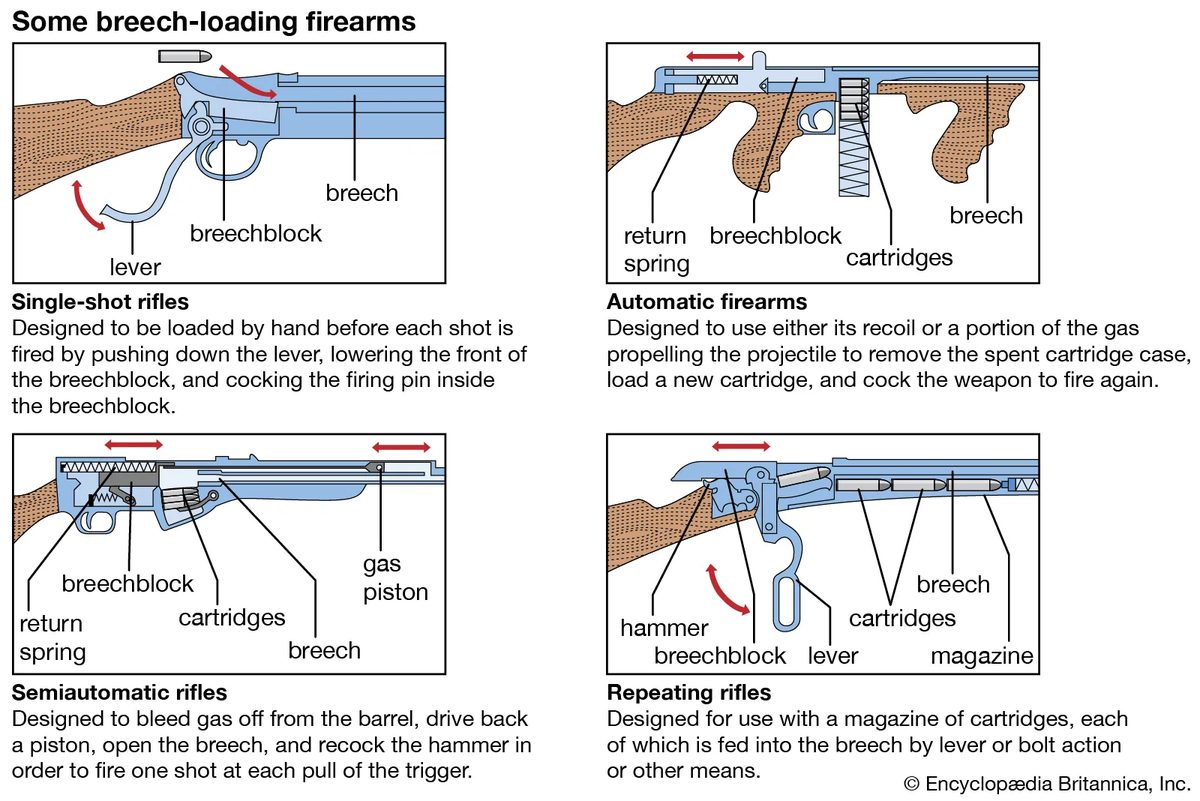
Then came the metallic cartridge. This was the real game-changer. It combined the primer, the powder, and the bullet into a single, self-contained unit. Suddenly, breech-loading mechanisms didn’t have to worry about gas escaping. They could be gastight. The 19th century saw this technology explode into single-shot designs, revolving-cylinder pistols, and lever-action repeaters.
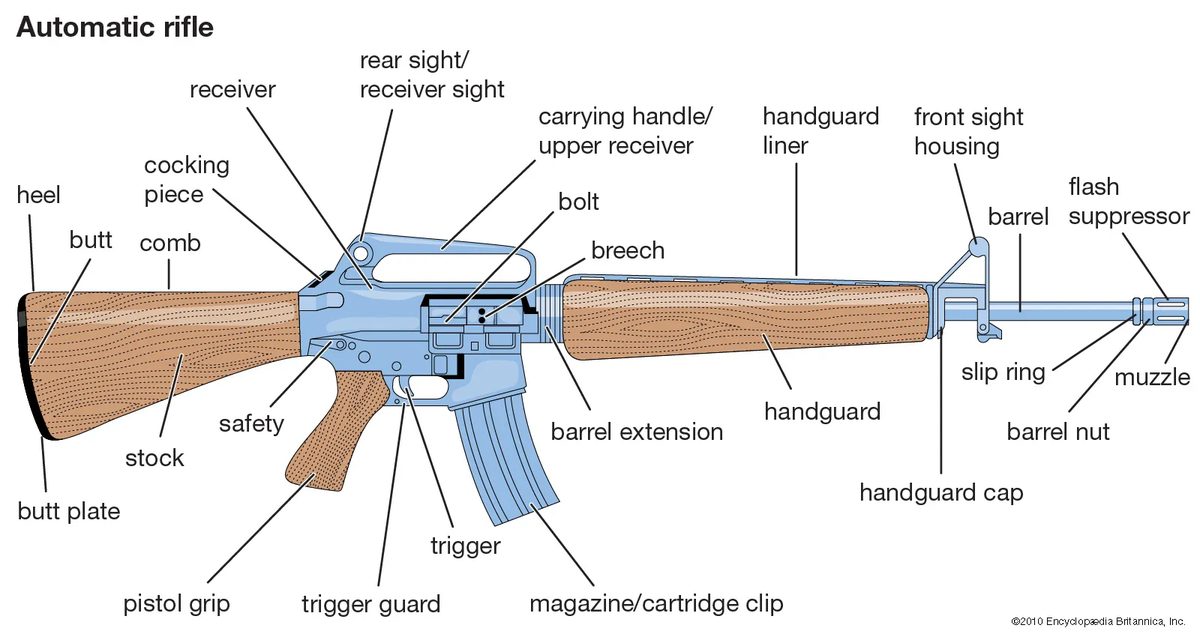
By the early 20th century, bolt-operated rifles dominated the battlefield. Think of the Springfield, the Enfield, the Mauser. They were rugged. They were military-grade. But World War II shifted the paradigm again. The assault rifle emerged. Light. Medium-range. A switch flipped the fire from semi-automatic to fully automatic. It became the standard issue for militaries worldwide. The bolt-action rifle didn’t die, though. It just moved.
Bolt-Action Dominance in Hunting
If you look at a hunting blind today, you are likely looking at a bolt-action rifle. It remains the most common type for sport hunting. Why? Efficiency. Reliability. Simplicity. They are easy to manufacture and even easier to maintain in the field. Most feature box magazines, holding several cartridges for quick follow-up shots.
Lever-action and pump-action rifles exist. Slide-action variants too. But they are niche in the 21st century. The semi-automatic rifle found its footing differently. After World War II, these became popular for hunting in the United States. You can pull the trigger, the gun cycles, and you are ready to shoot again without touching the bolt.
There is a catch. It is illegal in some countries to hunt with a semi-automatic rifle. The logic varies by region, often tied to notions of fairness in the chase or specific conservation laws. But in the US, the semi-auto is a staple.
Decoding Caliber and Performance
How do you classify a rifle? Usually by its action and its caliber. Caliber is just the bore diameter. Measured in inches or millimeters. The full title of a rifle tells a story. Look at the .30-30. It indicates a bore diameter of .30 inches (about 7.62 mm). The second number? The weight of the powder charge. Thirty grains. Roughly two grams.
Power isn’t just about size. It’s about velocity. It’s about the weight and shape of the bullet. A .257 Weatherby proves this. The name references the inventor, Roy Weatherby, who developed the cartridge. The bore is smaller than the .30-30. Yet it is considerably more powerful. Why? Speed. The Weatherby bullet travels much faster. Kinetic energy depends on that velocity squared. So a smaller bullet, moving faster, can hit harder than a larger, slower one.
This is why understanding the specs matters. You aren’t just buying a tube with a stock. You are buying a specific combination of mass and speed designed for a particular task. Whether you are taking down a deer at 100 yards or engaging a target at 500, the physics don’t change. Only the math does.
The shift from muzzle-loaders to assault rifles wasn’t just