The enduring mystery of the #Amber Room: Europe’s Missing Eighth Wonder of Europe
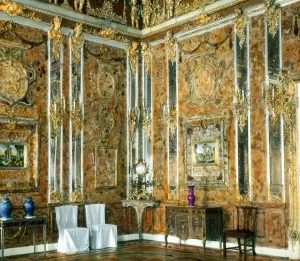
The legends surrounding the amber room are as rich as the amber panels themselves. The Prussians ordered the room in 1716 as a gift to the Russian Tsar Peter the Great and it was nicknamed “The Eighth Wonder of the World”. It hasn’t lost its pull. In fact, its absence amplified the fascination. Seventy-five years after it was dragged from Russia by Nazi troops, its mystery continues to fuel speculation. People want to know where it is.
How did the Amber Room disappear?
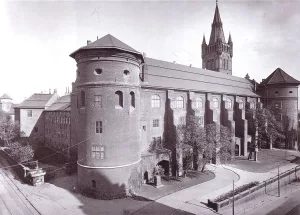
The timeline is brutal. During World War II, the German army removed the paneling from the room and moved it to Königsberg Castle in East Prussia. When the Soviet Red Army advanced 1945, the castle was bombed. The amber vanished into the chaos.
Some say the panels were melted down for their gold content. Some claim it was hidden inside a mine. The official Soviet position has long completely denied the existence of this room. In 1979, a KGB officer confessed. The room was indeed been taken. It was probably destroyed or lost in the last years of the war. However, no physical evidence was found.
Why does the mystery remain?
The Amber Room isn’t more than just a piece of furniture. It is a symbol of lost cultural heritage. Its absence feels like a wound that never healed. Theories range from the logical to the absurd.
- Was it smuggled to the United States?
- Is it hidden in a Russian bunker?
- Did the Nazis manage to transfer it to Germany?
Each theory inspires the next. There is no evidence. That’s the problem. And the solution.
The Quest Continues
The Modern searches uses satellite imagery and archival research. Some claim to have found fragments. None have been confirmed. The search continues, as this room represents more than gold and resin. It represents a gap in history. A hole where something beautiful used to be.
People still look. They dig. They hope. Amber is still elusive. The mystery remains.
What started as a diplomatic handshake ended mysteriously. The 1716 Treaty of Berlin did more than change borders. It sparked a curious exchange that characterized both empires and was forgotten in history. Prussia and Russia strengthened their alliance against Sweden. To seal the deal, the King of Prussia sent gifts. This is more than just a gift.
55 tall soldiers who had been chosen especially for their height marched from Russia to Potsdam. They were living prizes, “standards,” the level of masculinity of the Prussian court. In return, Emperor Peter the Great received what is considered the most expensive wallpaper in human history.
The Bernsteinzimmer (Amber Room) left Berlin for St. Petersburg in 18 large wooden boxes. It is a colorful baroque room with carved rather than painted walls. Mix amber panels with gold leaf and mirrors to let in bright light. Originally commissioned by King Frederick I of Prussia for Charlottenburg Palace, this room has now achieved legendary status. Now we are going east.
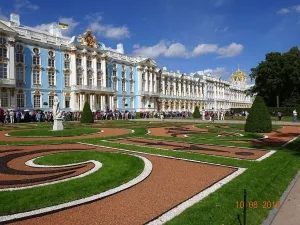
For more than two centuries, the Amber Room was the crown jewel of the Russian royal family. It was installed in the Summer Palace and later moved to Catherine’s Palace near St. Petersburg. It was a testament to wealth, art and imperial power. But this status comes at a price. The room has become an target.
The story of its disappearance is as complex as its structure. During World War II, Nazi troops looted Catherine’s palace. They removed the amber panels, packed them in wooden boxes and transported them to Königsberg. This is where the trail gets cold. It’s not just a lost. It disappears.
No one knows exactly what happened to the 18 wooden boxes after they left St. Petersburg. Some say they burned. Some people whispered that the ship might have been smuggled out by rogue officer. There are conspiracy theories involving treasure hunters and secret societies. But the truth is buried.
The search for Bernsteinzimmer has spawned documentaries, books and even a government committees. Why is the Amber Room so important? It’s not just about its material value. It’s about what it represents. A work of art that defines an era. A symbol of cultural heritage that was stolen and never returned.
Reconstruction work has started. Craftsmen tried to create a new version of the room with the help of old photos and historical documents. It’s very close. But this is different. The original amber panels, the unique way the light hits the gold, the scale of the original craftsmanship – none of this can be duplicated.
The soldiers who left Russia in 1716 never saw this room again. They are just pawns in a bigger game. The Zar got the wallpaper. The king has got his giants. This room got a home and will eventually become its tomb.
I would also like to ask you a question about this topic today. Why did it really disappear? Was it destroyed in a fire or Did it disappear in the chaos of war? Answers are kept in archives that are never opened. The mystery remains, because the room itself has disappeared.
Amber remains in the dark. Or underground. Or in a vault we don’t have.
Vanishing Act: What Really Happened of the Amber Room?
In the fall of 1941, the whimsical treasure hunt had turned into brutal demolition work. The German occupiers didn’t just look at the Amber Room. They tore it apart. The wall panels, the intricate interiors, everything was torn to pieces. This was not a careful extraction. It was a robbery on an industrial scale.
The entire room was dismantled in just 36 hours starting on October 14. Think about it. No detailed inventory spreadsheet. No museum-grade crating protocols. Just brute force and speed. It was later rebuilt at Königsberg Castle in East Prussia. At least they tried. The room became a exhibit for the Nazi elite and a prize for their glorious conquests.
Then, silence.
After a few years, the Amber Room disappeared. Completely. No trace. No final photograph. No receipt. Just empty space where one of the most opulent rooms in history. This disappearance sparked a century of speculation. Did it burn? Did it sink in a U-boat? Was it cut into small pieces and sold on the black market? Or is it still out there? Is it wrapped in fabric? Hidden in a bunker? Waiting to be found?
The truth is unclear. The search continues.
How the Nazis dismantled the Amber Room
The logistics of moving the Amber Room were incredible. The original room was commissioned by Peter the Great and given to Frederick William I of Prussia. Made of 6 tons of amber, gold leaf and mirrors. However, by 1941 it was sitting in the Catherine Palace near Leningrad (now St. Petersburg).
As the German army advanced, they saw value. Not artistic value, necessarily. But strategic value. The Nazis wanted to display it in Königsberg to showcase their dominance over the conquered East.
Demolition proceeded in a hurry. The room was taken apart one by one. Each piece was labeled. But the labeling was hasty. Many pieces lost their identifiers. “How” does its disappearance begin here? Records were lost due to the chaos of war. Boxes were mislabeled. Trucks were diverted.
After 36 hours of hard work, the disassembled room was loaded onto the trains. Destination: Königsberg. Timeline: Tight. The security: non-existent by today’s standards. The room was reassembled inside the castle. It looked magnificent. It also made a target.
Why the Amber Room is important today
You may wonder why we still care about a room of amber and gold. It’s not just about material value. It’s all about the mystery. It’s about the loss of culture. The Amber Room symbolizes what can be lost when beauty becomes a weapon.
This is important because it represents a gap in history. Gaps where information should be. Historians, treasure hunters and conspiracy theorists are chasing the same ghost. Visiting the Amber Room makes it easier to explore Nazi looting, secret bunkers and the fate of art during World War II.
This is important because finding it is a miracle. Not only for the monetary value, but also to prove what happened. That would confirm the theory. It exposes the lies of others. The story that has been in the series for 8 years ends.
One fact is certain. The amber room is gone. It is a masterpiece of architecture and craftsmanship and is known by some as the “eighth wonder of the world”. It was last seen probably on the evening of August 27, 1944. The room itself has disappeared. The same applies to the objects inside it.
We are talking about intricate wall and ceiling carvings made of fossilized resin. In the 18th century, this material was valued like precious stones. It’s not just wood and glass. It’s amber.
What’s missing?
Theories suggest that it’s not just the walls that disappear. The city palace burned to the ground the night British bombers reduced modern-day Kaliningrad to ash and rubble. The amber room is inside.
However, the damage is not limited to the panels. The prevailing theory is that many other objects were lost during these attacks.
- Gold-plated candlestick with amber decoration
- Intricate commodes
- Artistic mirrors
- Mosaic installations
These objects are part of the whole. They are believed to have been missing since the airstrike. Palaces are containers. What’s inside is the treasure.
Final disappearance
As we enter 1945, the timeline becomes clearer and less tragic. the room was already missing when the Battle of Königsberg began. It hadn’t been seen in months.
In this battle, the city palace again suffered heavy damage. Königsberg eventually fell into the hands of the Red Army. Structures were damaged. History is buried. The room was never returned.
“This room was probably last seen during the chaos of August 1944, when the final Soviet offensive sealed its fate in ruins.”
The mystery isn’t just about missing furniture. It’s about where those pieces went after leaving Königsberg. Did they survive the war? Were they hidden in a bunker? Destroyed by fire? Or are they scattered among the ruins of a destroyed city?
We don’t know. The answers remain in the dark. The room is a ghost. The city now has another name. The search continues, but the trail is cold.
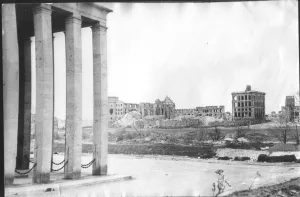
The amber room did not go up in smoke. At least that’s what this document suggests.
Alfred Rohde, director of the city’s art collection, wasn’t about to let fire or war destroy the years of storage. Months before the bombardment of Königsberg, he ordered the room to be disassembled. He moved it to a bulletproof basement under the castle. Smart move. Or so it seems.
But here’s the problem. Later information is unclear.
Were the boxes left in the bunker? Were they moved to a safer part of town? Or were they smuggled out of the country entirely before the sky fell?
There is no clear answer. Historians and researchers have spent decades trying to locate the final resting place of the 6 tons of amber, gold, and mirror tiles.
The ashes of Königsberg
When the dust settled after the destruction of the city, the original theory was very simple. it burned.
Soldiers and local researchers combed the ruins of the castle and found charred remains. Twisted iron hinge. Fragments of paneling. Decorative shards that looked like they belonged in that famous room. It’s easy to believe the worst. The Amber Room, a treasure of the Russian Empire, was incinerated.
But the evidence just didn’t add up.
Why did the fire theory collapse?
Over the years, detectives and historians have dug deeper. They found a contradiction.
If this room was stored in the basement of the castle, why is there no indication that a large, concentrated fire could have consumed such volatile resinous objects in that storage location? The “charred debris” found in the ruins often lacks the structural integrity typical of amber plates. Some pieces clearly came from other wooden furniture or structural parts of the castle itself.
The more I looked into it, the less plausible the fire theory became.
Who is looking for a lost room?
The search continues, as the Amber Room represents more than just lost property. This is a hole in history. One chapter is missing.
- Investigative journalists tracks down old Soviet shipping manifests.
- Amateur historians look for similar craftsmanship in cellars and private collections.
- Russian and German official commissions regularly reopen cold cases.
Some claim to have found it. A private museum in St. Petersburg? A hidden room in a German castle? A shipment intercepted by the Allies? All clues end in a dead end.
The room remains a ghost.
Not because it was destroyed. But because it was moved. Hidden away. It was forgotten by those who knew where it went.
Is it in a dark basement in Kaliningrad? Buried under a freeway? Or is it stored in a private vault that only one person knows?
We may never know.
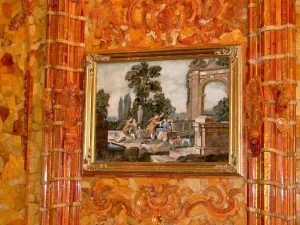
It starts with the chair. Or maybe a sculpture. Maybe you’ll find a piece of furniture in a dusty London auction house marked “Probably from the Amber Room.”
We want to believe it.
But most of these clues are dead ends. They are fragments separated from the whole. However, there is one important exception.
In the 1990s, the German police seized a commode and the stone mosaic. Experts can link these products directly to their original collection. They fit the craftsmanship. They fit the history.
This is the problem.
The goods were stolen “before” they arrived in Königsberg. They were looted at the beginning of the war. So while they prove that the room existed and that it was moved, they say nothing about where the rest went when it arrived in East Prussia.
This frustration has fueled modern conspiracy theories.
Each new document unearthed from ruins and archives is torn apart in search of meaning. Let’s look at the diary of Professor Alexander Brjussow.
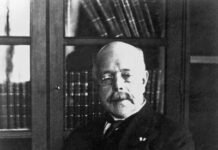
Brussow led the first Soviet committee to Königsberg to search for Nazi loot. He’s looking for art. He wasn’t looking for ghosts.
However, his notes have been interpreted in two different ways.
Some historians point to his account and say, “He writes of destruction. The room burned.”
Others saw the same line and claimed: “He was describing conservation efforts. The room was preserved and hidden.”
Which explanation is correct?
The truth may lie in the silence between his words. But we continue to fill this silence with our own desires. We want the room back. We want it found.
So we keep looking in the wrong places. We still rely on false documents.
The toilet and the mosaic were gone. Brjussow’s diary is just paper written in ink. It remains exactly what it has been for eighty years.
A hole in history.