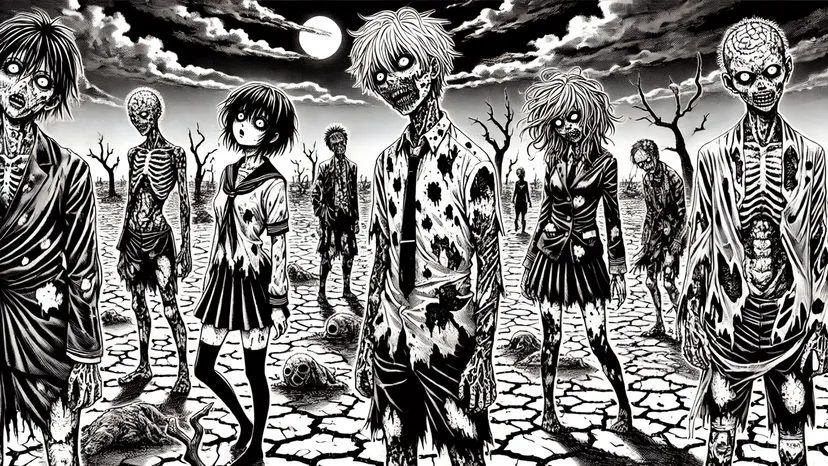
Live-action horror relies on shock tactics. Prop blood. CGI monsters. Green screens. These things work, sure. They startle you. But they also break the spell. You see the wires. You see the budget. You remember you are sitting in a theater.
Horror anime does something else. It burrows. It taps into the deepest, weirdest corners of the human psyche and leaves a mark that lasts longer than a jump scare. There is no suspension of disbelief to break because the medium itself is a dream. The tension is baked into the animation style, the character design, the very way the story unfolds.
If you are new to the medium, the learning curve can be steep. The genre is vast. Some entries are pure gore. Others are subtle psychological mind-games. The following three titles offer a diverse entry point into why this format is so uniquely terrifying.
How Tokyo Ghoul Reimagines the Zombie Trope
Zombie stories are everywhere. The walking dead trope is a staple of cinema and television. We have seen it done a hundred times. Yet, the genre demands constant reinvention. We crave a fresh perspective on the collapse of society.
Tokyo Ghoul (2014) provides exactly that. Based on the massive manga franchise, this series twists the classic zombie apocalypse narrative into something far more intimate and disturbing.
These aren’t mindless shufflers. These are ghouls. They hide in plain sight. They look like us. They smell like us. But they are stronger. Faster. And they are hungry. The horror here isn’t just about being eaten. It’s about the paranoia of not knowing who is human and who is a predator hiding in the crowd.
The series premiered in the US on Adult Swim’s Toonami block in 2017. You can find it on most major anime streaming platforms today. The animation quality is sharp. The color palette often feels sickly, reinforcing the unease. The plot follows Kaneki Ken, a college student who transforms into a half-ghoul after a date with a girl who turns out to be one of them. The fallout is brutal.
Why Parasyte: The Maxim Is Peak Body Horror
Body horror is a niche that anime handles better than almost any other medium. It explores the violation of the self. The loss of control. The physical transformation.
Parasyte: The Maxim (2014-2015) is a masterclass in this genre. The story begins with a mass invasion by parasitic extraterrestrials. Their goal is simple. Take over human hosts. Control the brain. Use the body as a vessel.
Most of them succeed. They burrow into the back of the neck. They take the wheel. But one misses. It slides down the ear and attaches to the hand of a high school student named Shinichi Izumi.
This creates an uneasy alliance. Shinichi and his hand, named Migi, must survive. They are forced to cooperate to protect other students and, eventually, the world from a clandestine invasion. The horror is visceral. You see the parasites tear through flesh. You see them mimic human behavior with unsettling precision. The animation captures the squelch and slide of alien biology in a way that feels real.
The series asks difficult questions about humanity. What makes us human if our bodies can be hijacked? Is Shinichi still human when he shares his mind with an alien? The answers are not clean.
Where Psychological Horror Anime Blurs Reality
Not all horror needs gore. Some of the scariest stories live in the gap between reality and fantasy. This is the realm of psychological horror.
Paranoia Agent (2004) stands at the top of this category. Created by Satoshi Kon, the series is a surreal, nightmarish investigation into the collective psyche of Tokyo.
The plot centers on a series of attacks by a figure known as Lil’ Slugger. He is a young boy on roller skates, wielding a golden baseball bat. He leaves victims in comas, their minds shattered by the trauma. The police assign detectives to the case, but the more they dig, the deeper the rabbit hole goes.
Each attack reveals new clues. And dark
The list of terrifying animated series doesn’t stop at the usual suspects. If you’ve already burned through the mainstream staples and are hunting for more blood, fear, and psychological unraveling, there is a deep cut pile waiting for you. These thirteen titles range from steampunk zombies to psychological breakdowns, each offering a distinct flavor of dread.
Vampire Hunter D: Bloodlust (2000)
This film is a cornerstone of the genre. It is dark fantasy at its most atmospheric. You get vampires, werewolves, and ghouls. They are all present in a world that feels genuinely hostile. The animation is lush. The tone is unapologetic. It serves as an excellent entry point for those who want horror without the immediate shock of gore. The aesthetic is clean. The danger is palpable.
Puella Magi Madoka Magica (2011)
Don’t let the pastel aesthetic fool you. This series deconstructs the magical girl trope. It starts like a show about middle school girls gaining powers to fight supernatural threats. Then it twists. The narrative becomes a grim exploration of hope and despair. It challenges the viewer. It demands attention. You might expect a lighter tone, but the payoff is heavy. It stands shoulder-to-shoulder with classics like Sailor Moon, yet offers a far darker narrative arc.
Kabeneri of the Iron Fortress (2016)
Steampunk meets zombie apocalypse. The story follows a young man trying to protect his town from infected kabane. When a zombie-hijacked train crashes into his home, he fights back. He survives. But he is infected. Exiled to roam a new world, his journey is one of isolation. The action is brutal. The setting is unique. It asks what it means to be human when you are no longer fully alive.
Attack on Titan (2019-2021)
Yes, it is sci-fi horror. The premise is simple. Humanity lives behind three walls to escape Titans. These are flesh-eating giants. When the wall is breached, the protagonist Eren Yeager loses his mother. His drive becomes revenge. He joins the military. He uses high-tech gear to fight back. The scale is massive. The stakes are existential. It is a relentless chase. The horror comes not just from the monsters, but from the crumbling of civilization itself.
Higurashi When They Cry (2006-2007)
Think of a small-town murder mystery. Now set it in a fictional 1980s Japanese village. It is like Stranger Things but cursed. Weird events happen daily. Friends turn on each other. The paranoia is thick. The series loops through time, showing different outcomes of the same traumatic events. It is a puzzle box. The horror is psychological. It relies on tension before it delivers violence.
Yamishibai: Japanese Ghost Stories (2000-2001)
This series uses a distinct visual style. It mimics kamishibai, or paper theater. Each episode is a standalone short. The stories draw from classic folklore and urban legends. The pacing is quick. The scares are sharp. It does not rely on long buildups. It hits you with a myth and leaves. It is efficient horror.
Death Note (2006)
The 2017 Netflix remake missed the mark for many fans. The original anime remains the definitive version. The plot is straightforward. A boy finds a notebook. If you write a name in it, that person dies. The protagonist, Light Turner, teams up with a shinigami named Ryuk. They eliminate evildoers. The shinigami extends its own life by taking the remaining years of its victims. The cat-and-mouse game is intense. It is a thriller first, horror second.
“Any names written on its pages end up in a series of bizarre deaths.”
Hell Girl (2005-2006)
This is a supernatural drama with a dark contract. Ai Enma answers online requests. She sends evil people to Hell. But there is a catch. The person who requests the service must join their victim in Hell after they die. It is a tale of revenge and consequence. The moral ambiguity is stark. It asks if vengeance is worth eternal damnation.
Wicked City (1987)
A dark fantasy film set in Tokyo. A secret police force called the Black Guard protects humans from supernatural beings. These creatures try to infiltrate from the demon world. The balance between dimensions is fragile. If the Guard fails, both worlds collapse. The animation is dated but stylish. The atmosphere is noir. It is gritty and violent.
Hellsing (2001)
The Hellsing Organization is a group of demon hunters. They are the Royal Order of Protestant Knights. Integra Hellsing leads them. Their mission is to protect the Queen and country. They fight vampires, Nazis, and other horrors. Alucard, a powerful vampire, serves as their weapon. The action is over-the-top. The violence is excessive. It is pure spectacle.
Perfect Blue (1997)
This is a psychological thriller. It is widely considered one of the best horror anime ever made. The plot deals with celebrity culture. It explores trauma and paranoia. The line between reality and psychosis blurs. The viewer is never sure what is real. It is disturbing. It is complex. It stays with you.
Corpse Party: Tortured Souls (2013)
Fans of Elfen Lied and Ninja Scroll will appreciate this. It is hyper-violent. A group of classmates is trapped in a supernatural school. The environment is hellish. The imagery is graphic. It is not for the faint of heart. It might not be the first recommendation for new fans. It is too intense. But for veterans, it is a treat.
Ayakashi: Samurai Horror Tales (2006)
This is an anthology series. It features three epic tales. They are set in rural Japan. Ronin, bandits, and princesses are the main characters. The style mimics traditional kabuki theater. The horror is rooted in folklore. It is atmospheric. It is theatrical. It feels like a stage play come to life.
Now That’s Off Limits
Some of these titles are banned in China and other countries. Death Note is one example. The restrictions are due to controversial themes and graphic material. The horror is not just in the story. It is in what the story challenges. The censorship highlights the power of these narratives. They are dangerous. They are influential. They are worth watching.